Finding a place to live in London was hard, as I had been turned down many times. While I was still strugging, my host invited me for dinner. It was heartening to talk with him.
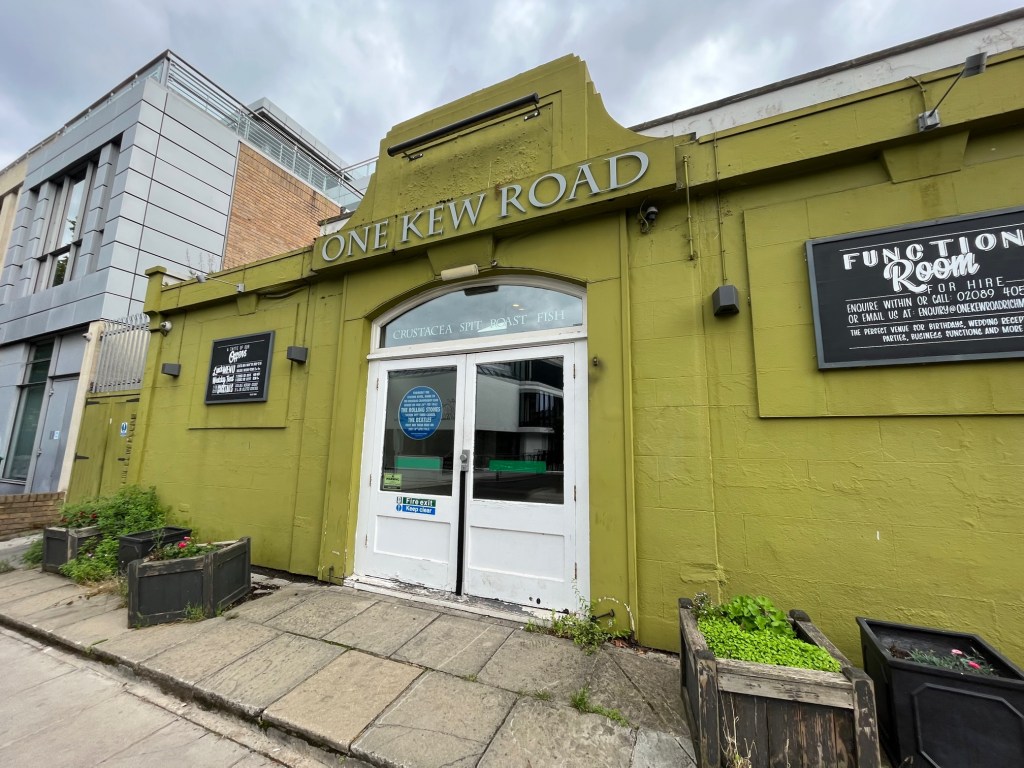
We went to a pub called One Kew Road, which was opposite Richmond Station. It was the first time I’d ever visited a UK pub. The pub was spacious, with a few couples chatting and a young man typing on his laptop. The ambiance was cozy, with warm lighting, sets of sofas, and jazz music in the background. The night was early, around 6 pm.
My host bought me a pint of Peroni. It was refreshing as it gave a kind of citrusy aroma. It later became my first choice whenever I popped into a pub.
After ordering the food, we sat on a sofa and talked about music.
“Yes, I like rock music. I know the Beatles, and I like Oasis.” I said
“Great! Do you know this was the place where the Rolling Stones first met the Beatles? It’s a stiff competition in British rock music history.” He said
“Really?”
“Yes. There is a showcase at the back. I’ll show you later.”
Then, he asked me why I had moved to the UK, and I told him a long story from 2019.
He showed his understanding. He said he had travelled to Hong Kong in late-May 1989. One day, he was in the Mandarin Hotel and saw the demonstration. “It’s impressive.” He said.
He paused for seconds. Perhaps politics was a bit serious, especially the Chinese one. So, he talked about his story. He was born in Denmark. When he was 5, his parents took him away as his father was worried about the Nazi invasion.
“We were supposed to go to the UK, but unfortunately, the Germans blocked the route. So we stayed in Italy for a while,” He said.
“It was interesting. I remember the moment when I saw the Italian leader in the public square. The crowd was chanting, ‘Long Live Mussolini!'”
“Then they saw the Pope and did the same thing.”He said with a laugh.
It was a desperate journey, but he was good at finding a silver lining.
Listening to his story, I also learnt that people quickly turned into rhinos in a place without freedom. I was worried about Hong Kong.
While he managed to go to the UK, he mentioned many Danish people had moved to Minnesota in the US during the war. That’s why there was a Danish community.
Just as bright as his father, a teacher who later became a correspondent, my host went to Cambridge and studied Economics during the 1950s.
“Do you know who Keynes is? I could have met him if I had gone to the university earlier.” He said.
I was glad to recall some economic concepts from secondary school as we discussed unemployment and inflation.
Talking about work, my host became a marketing researcher after he graduated. He later jumped into the advertising industry in New York, working with the madmen of Madison Avenue. Time flies. He returned to the UK and became an education consultant.
 kai-kong.com